
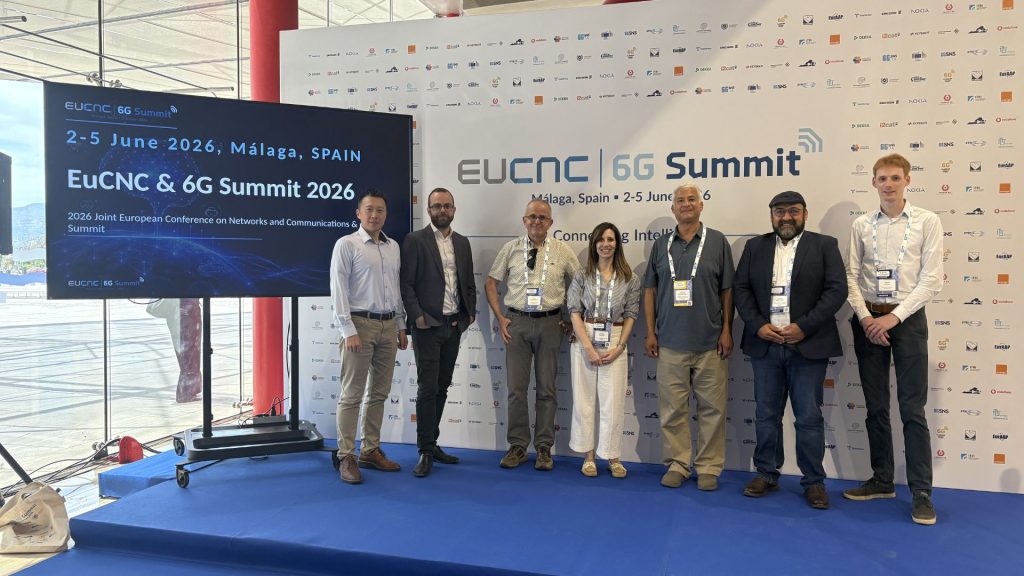
From 2-5 June 2026, the 6G-REFERENCE project joined leading researchers, industry representatives and policymakers at the EuCNC & 6G Summit 2026 in Málaga, Spain, contributing to the programme through two specialised workshops, a scientific paper presentation, a poster session, and a poster booth.
The 6G-REFERENCE innovators demonstrated the project’s commitment to developing innovative hardware enablers for cell-free coherent communications and sensing in future urban 6G networks.
Advancing 6G Hardware through Microelectronics and Photonics
The project’s first contribution took place during Workshop 4, “Microelectronics and Photonics Hardware Challenges and Solutions towards 6G”, organised by Luis Pessoa (Universidade do Porto/INESC TEC), Eric Klumperink (University of Twente and 6G-REFERENCE Technical Manager), Alexios Birbas (University of Patras) and Ioannis Tomkos (University of Patras).
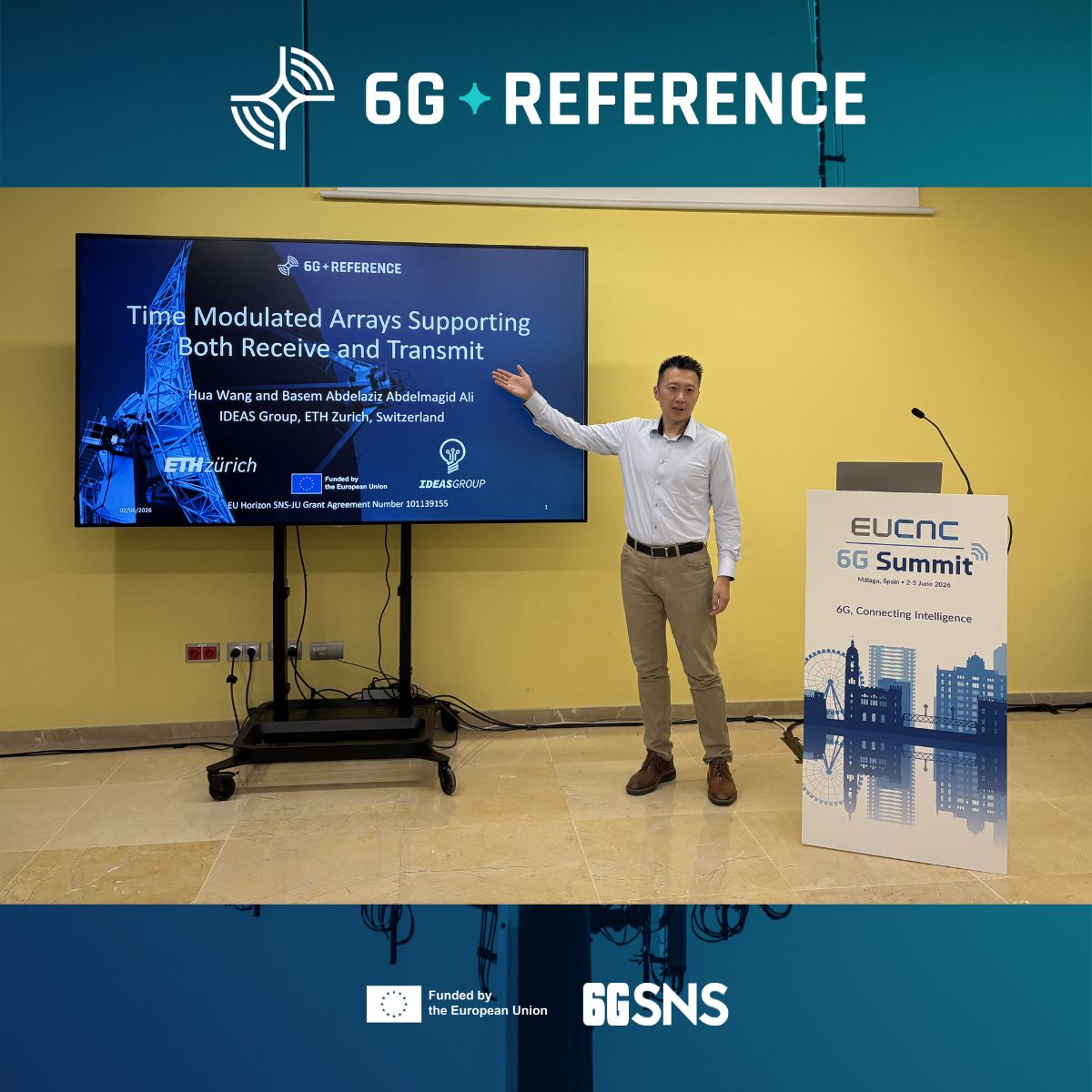
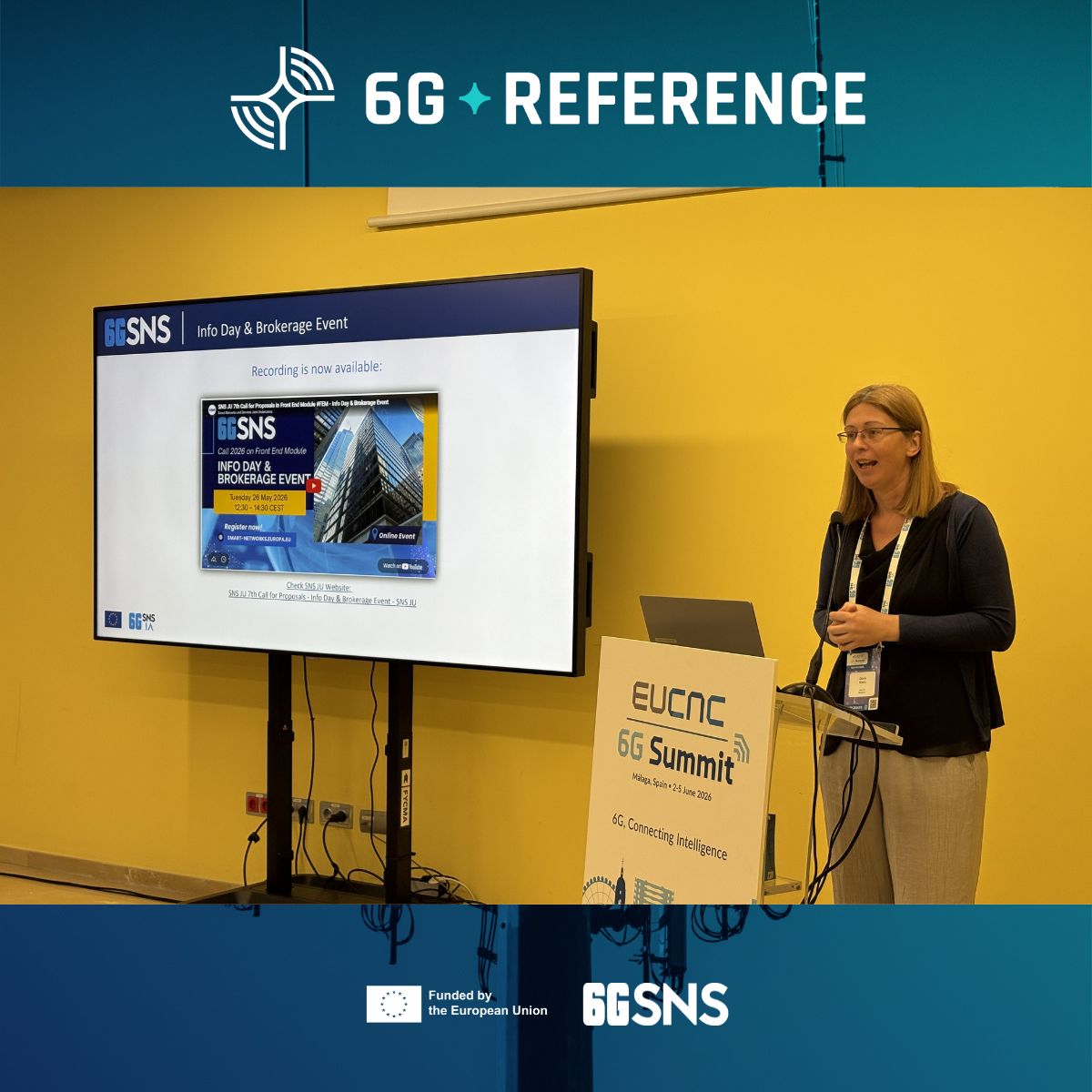
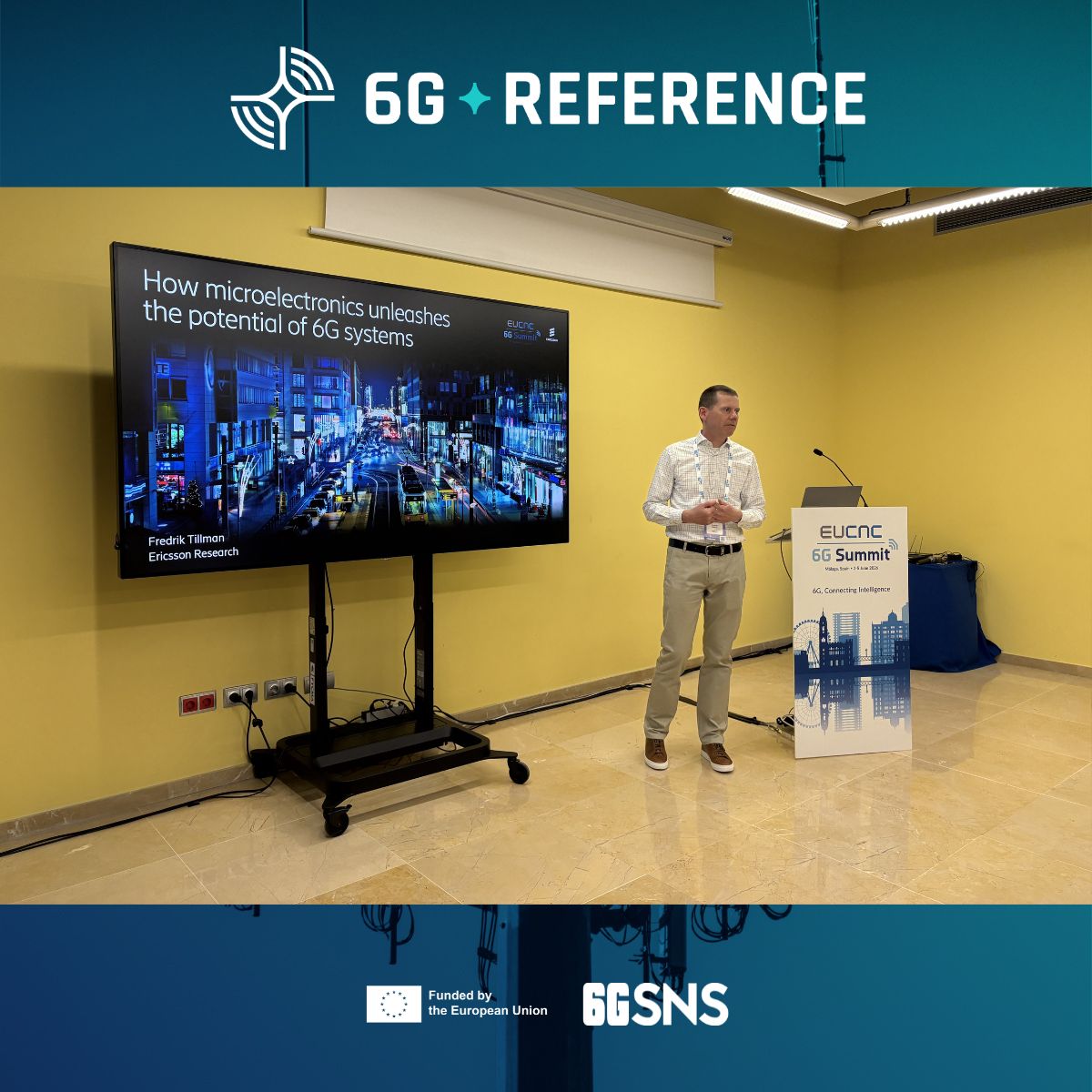
The workshop opened with perspectives from the Smart Networks and Services Joint Undertaking (SNS JU), represented by Oana Radu, and industry leaders on the critical role of microelectronics in enabling future 6G systems, with a keynote by Fredrik Tillman, Senior Research Manager at Ericsson. Speaking for 6G-REFERENCE, Hua Wang, Full Professor at ETH Zurich, presented the project’s research on Time-Modulated Arrays (TMAs) for concurrent multi-beam MIMO systems, worked selected among the Top-10 Key Achievements of SNS JU projects.
“Concurrent multi-beam MIMO arrays are key enablers for Integrated Sensing and Communication (ISAC) functionalities in future 6G networks. Time Modulated Array (TMA) can be a compelling solution to realise such MIMOs with low hardware overhead, achieving more functionalities with less complexity”, explained Hua Wang.
The session concluded with a panel discussion focused on hardware bottlenecks for 6G systems, electronics-photonics co-design challenges, and alignment between SNS JU, Chips JU, and pilot lines.
Contributing to Europe’s Integrated Sensing and Communication Vision
During the “Second Workshop on Integrated Sensing and Communications Initiatives on the European Research Framework”, Marc Bauduin, Research Engineer at imec, represented the project in Panel 3 – Architectural and Management Perspective.
Moderated by Xi Li (NEC), the session explored the system-level, architectural and management challenges associated with the deployment of ISAC-enabled 6G networks.
Marc contributed to discussions on how sensing and communication functions can be tightly integrated within future network architectures, supporting enhanced situational awareness, improved network efficiency and new service capabilities.
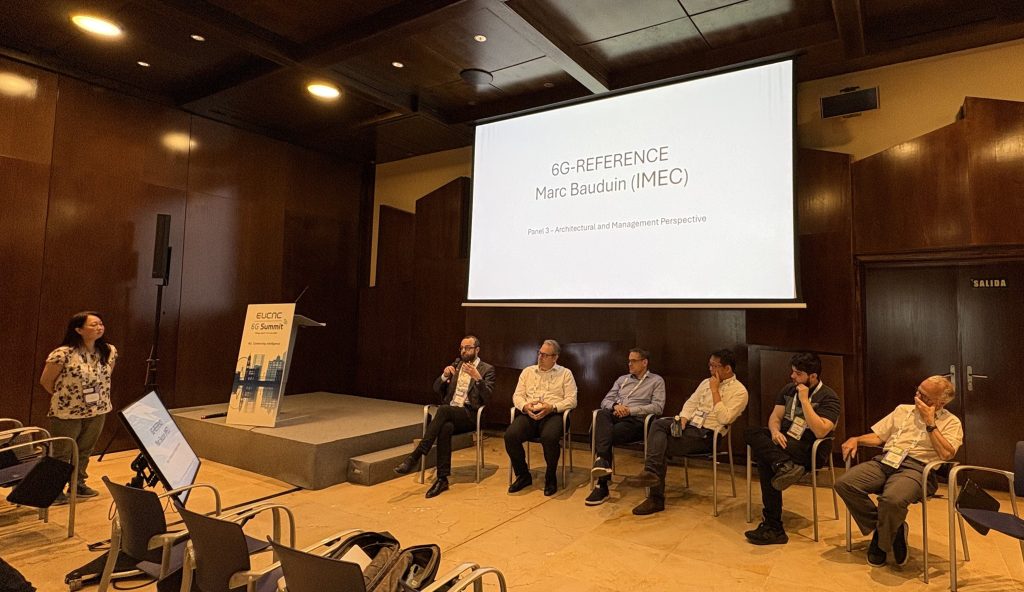
You can download Marc’s presentation on Zenodo.
Scientific Paper Presentation on Synchronisation for Cooperative ISAC
Another highlight of the event was the presentation of the scientific paper “Analysis of Over-the-Air Frequency and Time Synchronisation Requirements for Cooperative ISAC Radio Units with an RF Crystal Oscillator” by Robin Lohuis, PhD candidate in Integrated Circuit Design at the University of Twente.
Presented during Session PHY-2: ISAC, Radar and Localisation, the paper investigated synchronisation challenges in cooperative ISAC radio units, a crucial aspect for enabling distributed sensing and communication systems in future networks. This work is also co-authored by the researchers Erwin Hardeveld and Eric Klumperink, besides Robin Lohuis.
You can access on Zenodo Robin’s presentation and the scientific paper.
Poster Presentation on Low-Cost Sensing Technologies
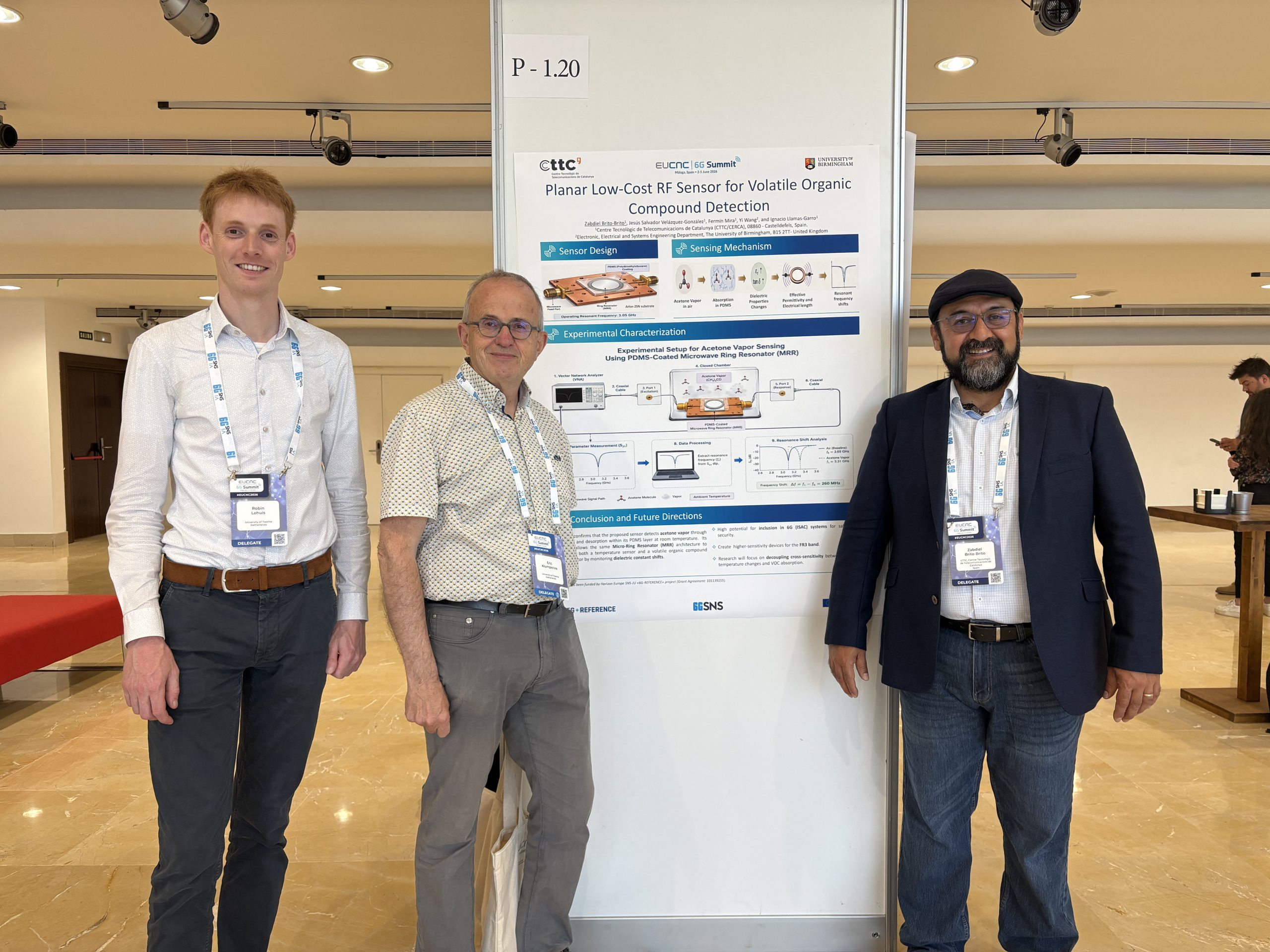
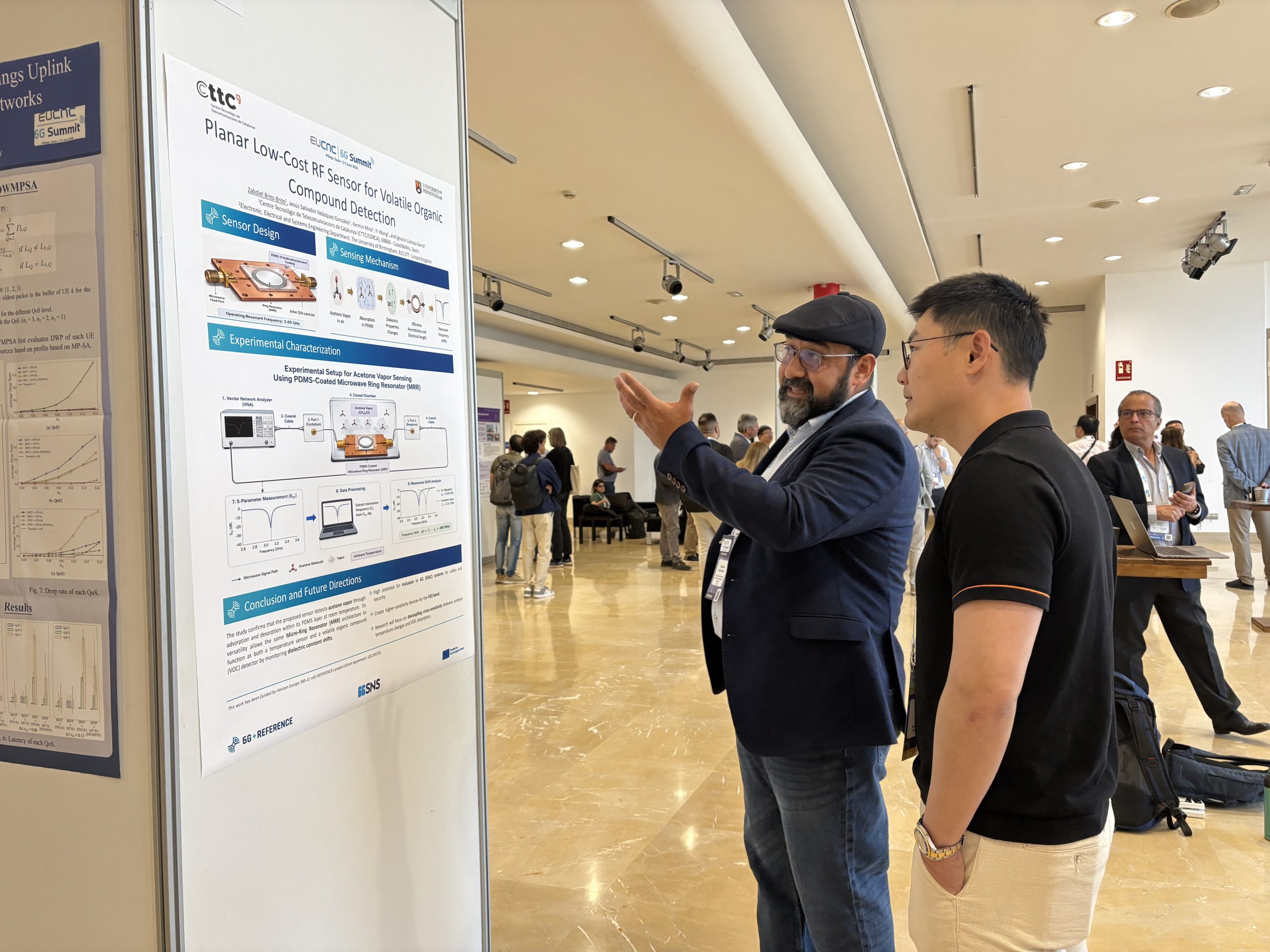
6G-REFERENCE also participated in Poster Session I with the poster “Planar Low-Cost RF Sensor for Volatile Organic Compound Detection”.
Presented by Zabdiel Brito-Brito, Senior Researcher at CTTC, the organisation coordinating 6G-REFERENCE, the poster showcased research exploring low-cost RF sensing technologies with potential applications beyond traditional communications.
The work was co-authored by Salvador Velázquez, Fermín Mira Pérez and Ignacio Llamas (CTTC), together with Yi Wang, Professor of Microwave Engineering at the University of Birmingham. The poster attracted interest from conference participants seeking to understand how sensing technologies can be integrated into future communication infrastructures and contribute to emerging 6G use cases.
Strengthening Collaboration Across Europe
Bringing together more than 1,000 participants from over 40 countries, the EuCNC & 6G Summit 2026 provided a unique platform to exchange knowledge, strengthen collaborations and present the latest advances in next-generation connectivity.
Through our participation in workshops, scientific sessions and poster presentations, 6G-REFERENCE reinforced our contribution to the European 6G research landscape and showcased progress towards developing advanced hardware enablers for cell-free coherent communications and sensing.