
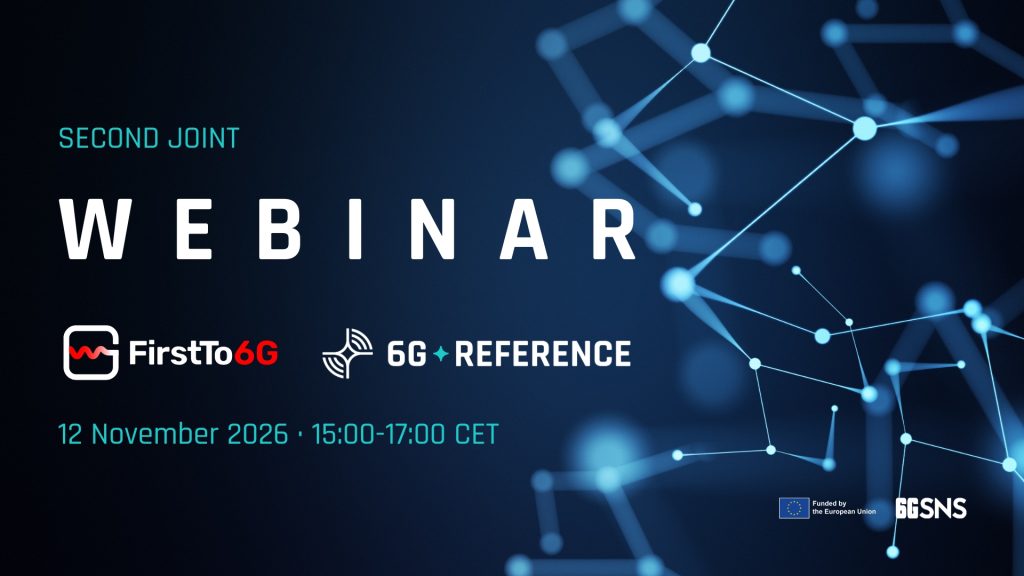
Following the success of our first joint webinar in January 2026, we are pleased to invite you to the second edition of the 6G-REFERENCE Webinar Series, co-organised with FirstTo6G, to continue the discussion on complementary microelectronics hardware concepts and the research of both projects.
During the webinar, we will present some of the most notable results from 6G-REFERENCE and FirstTo6G, followed by an open discussion on our respective approaches, and the synergies between the two Smart Networks and Services Joint Undertaking (SNS JU) projects, sharing the same stream, ‘B-01-05: Microelectronics-based Solutions for 6G Networks’.
This session brings together leading researchers and innovators from RWTH Aachen University, Sivers Semiconductors, University of Twente, ETH Zürich and RapidRF.
We encourage you to register and join our conversation on next-generation 6G hardware solutions on 12 November 2026 at 15:00 CET!
6G-REFERENCE and FirstTo6G Webinar Agenda
- 15:00-15:10: Welcome, Agenda Overview and Goals – Renato Negra, RWTH, Moderator (FirstTo6G).
- 15:10-15:30: Millimeter-Wave RF Front-End Design in 22 nm FDSOI Technology for Next-Generation 6G Communication – Martin Wiezell, Sivers Semiconductors (FirstTo6G).
- 15:30-15:50: A 20 GHz Direct Crystal Sinewave Sampling Fractional-N PLL – Erwin Hardeveld, University of Twente (6G-REFERENCE).
- 15:50-16:10: Time and Direction of Arrival Estimation under Interference and Multipath: Robustness and Super-Resolution via Spatial Filtering – António Barros, ETH Zürich (6G-REFERENCE).
- 16:10-16:30: RapidIP, an Algorithm-based Automated Design and Synthesis Tool used for Rapid Generation of RF (Radio Frequency) and Microwave Power Amplifiers – Eduard Heidebrecht, RapidRF (FirstTo6G).
- 16:30-17:00: Panel Discussion: Connecting the Dots – Synergies Across Our Two SNS Projects and and Potential Collaborations – Moderator, Speakers and Participants.
6G-REFERENCE and FirstTo6G Webinar Speakers
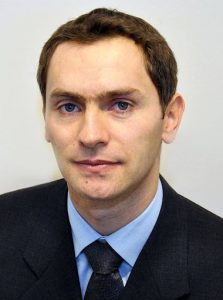 RENATO NEGRA – RWTH Aachen University (FirstTo6G)
Renato Negra received the M.Sc. degree in Telematics from Graz University of Technology, Graz, Austria, and the Ph.D. degree in Electrical Engineering from ETH Zürich, Zürich, Switzerland. Before joining ETH Zürich for PhD research on power-efficient linear amplification, he was involved in the design and characterisation of space-qualified RF equipment as development engineer at Alcatel Space Norway AS. His PhD research at the Laboratory for Electromagnetic Fields and Microwave Electronics at the ETH Zürich was focused on power-efficient linear amplification of wireless communication signals. Afterwards he was a Post-Doctoral Fellow at the iRadio Lab, University of Calgary, Canada, working on switching-mode power amplifiers and advanced wireless transmitter architectures. He became Assistant Professor for Mixed-Signal CMOS Circuits at RWTH Aachen University (2008), and a Full Professor for High Frequency Electronics (2013). His research interests are high frequency circuits and systems in silicon, III-V, and 2D-material technologies. Particular interests include power amplifiers and transmitter architectures, as well bendable electronics. He is co-founder of 4 deep-tech start-ups which all are based on research results of the Chair of High Frequency Electronics.
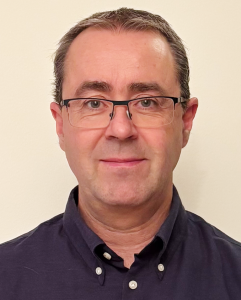 MARTIN WIEZELL – Sivers Semiconductors (FirstTo6G)
Martin Wiezell received the M.Sc. and Ph.D. degrees from KTH Royal Institute of Technology, Sweden, in 1996 and 2001, respectively. He was a Visiting Scholar at McMaster University, Canada, during 2000-2001. He has more than 20 years of experience in RFIC design. Since 2021, he has been with Sivers Semiconductors, where he develops RF front-end solutions for next-generation millimeter-wave transceivers in advanced RF-SOI technologies. Prior to joining Sivers, he held principal RFIC design positions at Spirea, DiBcom, Parrot, and Faurecia Clarion. His work has focused on the development of RF-CMOS circuits and receiver architectures for Bluetooth, WLAN, television, automotive, LTE, and IoT applications. As a co-founder of DiBcom’s Swedish design center, he led the development of low-power RF receiver architectures and was responsible for the top-level integration and tape-out of multiple IC generations that were successfully transferred to high-volume production. He is the inventor of four patents, has authored more than 20 scientific publications, and contributed to a book chapter on low-frequency noise modeling in advanced semiconductor devices.
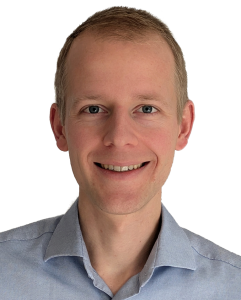 ERWIN HARDEVELD – University of Twente (6G-REFERENCE)
Erwin Hardeveld received the M.Sc. degree in electrical engineering from the University of Twente, Enschede, The Netherlands, in 2018. He is currently pursuing the Ph.D. degree with the Integrated Circuits Design Group within the context of the 6G-Reference project. His research interests include RF receiver front-ends, time synchronisation, and phase-locked loops.
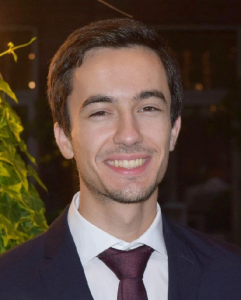 ANTÓNIO BARROS – ETH Zürich (6G-REFERENCE)
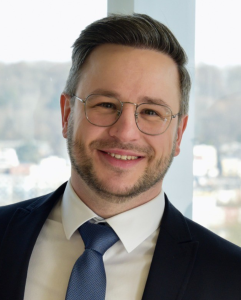 EDUARD HEIDEBRECHT – RapidRF (FirstTo6G)